
You’ve worked hard to hone your skills; put time and money into your work. And you’ve graduated from apprentice to bladesmith, all while working a day job. Fans of high-quality blades are beginning to take notice of your work. You’ve set up shop out of your home and sales begin to come in. You’ve transitioned from hobbyist to business owner and now your sales are blossoming. However, now you want to hone in on your business. How do the expert blade creators do it? Let’s explore their secrets!
Find Your Niche
There isn’t one blade that can work for everyone. Whether you want to stand out in kitchen knives, EDC, hunting blades, or just decorative pieces, you have to decide on your signature style. This can be defined by your grinding style, your chosen finishes, the handles you decide to create, or the basic performance of your blades. You want your customers to be able to recognize your blade out of a line up!
How do you find your niche? You don’t need a find a totally unique category; first, look at your own interests. What do you enjoy creating? Get a closer look at the last blades you crafted that you were particularly proud of or just drawn to in general. Some other things to consider include:
- Do you sell these? Sales are obviously important when considering which road you want to take your business down. However, if you really don’t have any interest in what could be the most profitable, you will likely experience burn out – and fast.
- When you post on social media, which posts get the highest engagement? This can be a good indicator of general interest. Again, this is to be taken with a grain of salt. We’ve all seen posts go “viral” only because it’s a flavor-of-the-month, after all.
- Who do you relate to the most? As we’ll go into, you’ll need to be speaking to these people on a regular basis. Do you lean more toward the outdoor/hunting crowd? Or are you more in tune with home cooks and professional chefs?
Who’s Your Hero?
Another option is to find your hero product. Are there one or two knives that you love to create? These should always be available and dialed in, so they always are always the same. Whether someone buys one now, or ten years from now, they should be completely familiar with the product. Your hero blade could be the totem of the niche that the rest of your business is built around.
Small Town Customer Service
This one might seem simple. Of course you want to provide good customer service. But as a business-owner that really takes pride in their craft, your customers may expect a more personal touch. The one thing most bladesmiths should do when running their own business is communicate up-front with their customers. Difficulty allocating materials and your own personal availability can impact when your customer receives your product. If you have doubts about any given lead times (even if it’s possible to meet the deadline) be sure your customer is the first to know. They’ll appreciate you reaching out, even if it’s bad news.
Be Excited – In Layman’s Terms
Your customer is interested in your work; but they may not understand technical terms. Remember when you were just starting as a bladesmith? Pretend you are speaking to a young you and don’t hold back! Feel free to get excited while explaining what work you put into your blades. What type of steel do you use? What finish did you put into the blade? How can your customer maintain a proper edge? You can add all this information onto your website, explain over the phone to a customer, or even add a handwritten note into each package you send.
Nurture Your Customers & Your Reputation
Caring for your reputation is very important in this industry. The blade community is really tight-knit with forums, meet-ups, and trade shows that operate year-round. If something goes wrong or there are any concerns from your customers, be sure to respond quickly and without being defensive. Offer any repairs or replacements, even if this may cost you in the short term. You will easily build loyalty and reliability via word-of-mouth.
Remain Personable but Scalable
The goal here isn’t mass production but rather controlled growth. You don’t want to lose your craftsmanship or your margins! To start, look at what truly has to be a “you” process and what doesn’t. A lot of steps in your process can be systemized or delegated without hurting your product or your brand.
Kilns and Heat Treat Ovens
Are you still using a forge to heat your steel? A forge can deliver ununiform and inconsistent heat. If you are increasing scale in your production, a kiln or heat treat oven can increase efficiency and decrease variability. Here’s what to look for when investing in this new heat source:
- Temperature: You want your new oven or kiln to be able to reach at least 2,000°F. One that reaches 2,100°F will allow you to do specialty steels like Magnucut.
- Voltage: Do you only have access to 115V in your current set up? Consider running a new 220V line to your workspace! A 220V machine allows for faster ramp up in temperature, decreasing your time spent waiting for that ideal temperature.
- Controls: Consider investing in a heat source that offers programmable temperatures, cycles, and cool downs. This allows you to truly set it and forget it.
Finishing Machines
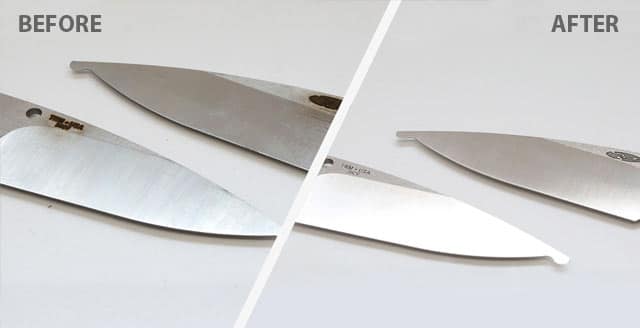
The right equipment can make your business more scalable, but only if it removes real timewasters in your process. You don’t want to end up purchasing expensive tools and equipment that you don’t fully use. One improvement can be finishing efficiency. Sanding by hand is where scale can go to die! If you’re aiming for a repeatable finish, consider investing into a HZ-6 Centrifugal Barrel Finishing Machine. This machine is economically friendly, takes up little floor space, and can remove and blend machine lines evenly in as little as five minutes. You can even achieve mirror finishes with a short, secondary step.
Where the Money Is
Most bladesmiths wait too long to hire a bookkeeper. They track things too loosely, mix personal and business expenses, and then tax time becomes a mess. Not only is this frustrating to those who just want to create, but it can also hide whether you are making real money on your craft! Hiring a bookkeeper keeps track of real profit per knife (or batch), can help you price correctly, and eliminates scrambling come tax time. If you’re just at the beginning of your business journey, consider starting with a separate bank account, credit card, and easy-to-use bookkeeping software.
But Wait… There’s More!
These are just some of the top secrets of the big bladesmiths you envy. Although there are many more things you can do to create a successful business and streamline your process, you can start by finding your niche, nurturing your relationships with your customers, and delegating parts of your process that just turn into busy work. If you’re interested in learning more about creating a more efficient finishing process, you can reach out to our team here: https://massfin.com/contact/ You can also explore additional finishing options that we offer for bladesmiths here: https://massfin.com/industries/knife/